

Things to do in Boston: complete travel guide (updated for 2026)
Boston is one of those cities that quietly grows on you. At first glance, it feels compact and easy to navigate, but the more time you spend there, the more layers you uncover: key moments in US history, elegant neighborhoods, leafy parks, and a pace that encourages slow exploration. When I first visited this North American city, what struck me most was how naturally sightseeing blended with everyday life. Historic streets, parks, museums, cafés, and residential areas all seemed to flow into one another. Our stay in Boston was short, as it was just one stop on a longer road trip through the USA and Canada, but it was enough to leave a strong first impression — and the feeling that it’s a city worth returning to with more time. In this detailed travel guide, I’m sharing the best things to do in Boston, where and what to eat, where to stay, how to get around, and a few easy day trips from the city, combining my own experience with updated, practical information for those visiting during the upcoming World Cup 2026.
***
Disclaimers:
- This post is based on my visit to Boston in August 2013 following our summer road trip to New York City, Long Island, Niagara Falls, Toronto, the Amish Country and Philadelphia. It has been updated for 2026 to reflect the most recent information available at the time of writing since Boston will also be one of the host cities of the 2026 FIFA World Cup.
- Please note that this article contains affiliate links. This means that, at no additional cost to you, I may earn a commission if you make a purchase or booking through some of the links included here. All opinions are my own.
***
🗺️ Best things to do in Boston
Founded at the mouth of the Charles River and home to around 670,000 inhabitants, Boston has grown into a city where historic landmarks, green spaces, and residential areas sit close together.
The main attractions are easy to combine thanks to the city’s compact layout and walkable neighborhoods. Many of the highlights below can be explored at a relaxed pace, often on foot, making it easy to mix history, culture, and everyday life without rushing from place to place.


🚶 Walk the Freedom Trail
Walking the Freedom Trail was, without a doubt, my favorite part of our visit to Boston and the best way to get oriented in the city. This red-brick pedestrian path connects 16 historic sites linked to the American Revolution and stretches for about 4 kilometers (2.5 miles), making it easy to follow independently without joining a guided tour.
The trail starts at Boston Common and leads you through some of the most important chapters of US history. Along the way, we passed places like Park Street Church, known for its role in the anti-slavery movement, King’s Chapel and its cemetery, the Old South Meeting House, where events leading to the Boston Tea Party of 1773 took place, and the Old State House, where the Declaration of Independence was read to the citizens of Boston in 1776. The route continues past Faneuil Hall and Quincy Market and through the North End, where you’ll find the Paul Revere House, former home of the patriot who famously warned of the imminent arrival of British troops. It ends in Charlestown at the Bunker Hill Monument (with great views over the city and harbor from the top), passing the USS Constitution along the way.
Rather than feeling like a traditional tour, the Freedom Trail felt like a relaxed stroll through history, where churches, cemeteries, and everyday streets gradually reveal how central Boston was to the birth of the United States of America.

🌳 Visit Boston Common and the Public Garden
Boston Common is the oldest public park in the United States and a natural starting point for exploring the city, while the neighboring Boston Public Garden feels more refined and peaceful, with ponds, footbridges, and carefully maintained flowerbeds. Located side by side, these two parks form the green heart of Boston and offer plenty of space to slow down between sightseeing stops.
When we visited in summer, the area felt especially lively, with people relaxing on the grass, jogging, or enjoying the outdoors. You can even take a Swan boat ride on the lagoon in the Public Garden, a classic Boston experience. I imagine both parks must feel completely different — but just as charming — under a layer of snow in winter.
If you enjoy green spaces, there are a few more parks and promenades worth adding to your itinerary:
- Arnold Arboretum: part of Harvard University, this expansive landscaped park is ideal for long walks among trees and seasonal foliage, especially beautiful in fall.
- Charles River Esplanade: stretching along the banks of the Charles River, this is a popular green space for walking, jogging, and relaxing by the water. It’s especially pleasant in good weather and offers lovely views back toward the city skyline.
- Commonwealth Avenue Mall: a tree-lined promenade running through Back Bay, perfect for a quiet stroll while exploring the surrounding neighborhood.
- Rose Kennedy Greenway: a modern linear park stretching through downtown Boston, offering green pockets, public art, and a pleasant break from the surrounding streets.


🍝 Discover the North End and other Boston neighborhoods
The North End blends Boston’s colonial past with a strong Italian heritage and is one of the most atmospheric areas in the city, especially in the evening. Even without sitting down for a meal, simply wandering through its narrow streets gives a great sense of local life and marks a natural transition between Boston’s historic core and its more residential neighborhoods.
Browse the prints for sale in my shop!
From the North End, it’s easy to branch out and explore several nearby areas that showcase very different sides of Boston:
- Back Bay: known for its elegant brownstone houses and wide avenues, Back Bay is home to Newbury Street and Copley Square, surrounded by some of the city’s most distinctive buildings, including Trinity Church, the John Hancock Tower, the Old South Church, and the Boston Public Library. It’s an area where historic and modern architecture sit side by side. While you’re in the neighborhood, you can go up the Prudential Tower to enjoy one of the best viewpoints in Boston.
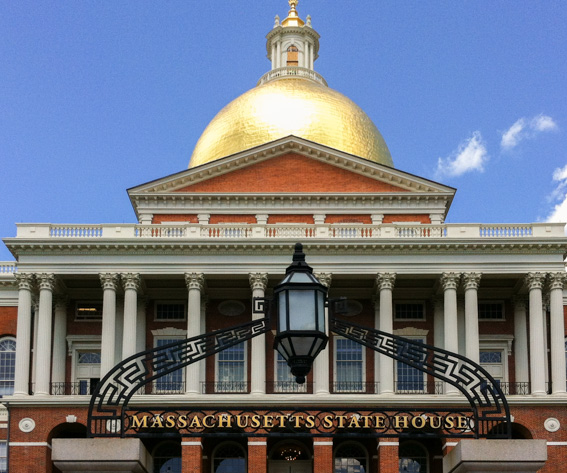
- Beacon Hill: this is one of Boston’s most iconic residential neighborhoods, characterized by brick sidewalks, gas lamps, and historic townhouses. Strolling around Beacon Hill — especially along Acorn Street and the surrounding streets — was one of my favorite moments of the trip. Just at the edge of the neighborhood stands the Massachusetts State House, whose golden dome marks the seat of the state government and served as a model for the Capitol in Washington DC.
- Charlestown: a quieter, historic neighborhood best known for its role in early US history. It features charming streets, harbor views, and landmarks linked to the American Revolution, offering a calmer contrast to downtown Boston.
- Chinatown and the Theater District: compact and lively areas that come alive in the evening, known for their mix of cultural venues, theaters, and nightlife, and easy to combine with a walk through nearby neighborhoods.
Exploring these neighborhoods on foot is one of the best ways to experience Boston beyond its main landmarks and get a feel for the city’s different rhythms.
Do you like my content? Subscribe to my newsletter to stay tuned.
🎓 Harvard, MIT and Cambridge
Crossing the river into Cambridge is absolutely worth it if you want to explore Boston’s academic side. The area is home to Harvard University and the Massachusetts Institute of Technology (MIT), and walking through their campuses adds a different perspective to the city beyond its historic core.
When we visited, Boston was part of a longer road trip from New York, and we arrived in Cambridge around dusk. Since both campuses are a bit further out, we decided to drive there with our rental car before dropping it off at Logan International Airport. Harvard feels classic and almost residential, while MIT offers a more modern and experimental contrast, making it interesting to see both in the same visit.
🖼️ Explore the museums and culture in Boston
Boston has one of the strongest museum scenes in the United States, perhaps only comparable to my beloved Washington DC. If you enjoy culture, you could easily dedicate a full day to museums, mixing history, art, and science. Some of the most interesting ones include:
- Boston Tea Party Ships & Museum: an interactive museum that brings one of the key events leading to American independence to life through exhibits, reenactments, and original tea ships.
- Isabella Stewart Gardner Museum: housed in a stunning Venetian-style palace, this museum is known as much for its unique layout and courtyard as for its impressive art collection.
- John F. Kennedy Presidential Library and Museum: a modern and well-curated museum dedicated to the life, presidency, and legacy of JFK.
- Judson B. Coit Observatory: operated by Boston University, it occasionally opens to the public during scheduled open nights, offering a more unusual cultural experience focused on astronomy rather than traditional museums.
- Museum of Fine Arts (MFA): one of the largest art museums in the country, with collections ranging from ancient civilizations to contemporary works.
- Museum of Science (MOS): an engaging, hands-on museum with interactive exhibits that appeal to both adults and families.
- New England Aquarium (NEAQ): located on the waterfront, this popular attraction focuses on marine life and conservation, with a central ocean tank and outdoor exhibits.
Boston offers several city passes that combine entry to museums and attractions at a discounted rate – worth considering when planning your itinerary.
📝 Practical travel tips for Boston
Often nicknamed “Beantown”, Boston is a compact and walkable city, but a bit of planning goes a long way. These practical tips will help you decide when to visit, how to budget your time and money, and what to expect once you’re there.

🌤️ Best time to visit
Spring (April–June) and fall (September–October) are generally considered the best seasons to visit Boston, thanks to mild temperatures and pleasant conditions for exploring the city. Summer, which was when we visited, felt particularly lively, with parks, outdoor spaces, and longer days adding to the overall atmosphere. Winter, on the other hand, can be cold and snowy, but it also brings a quieter, more local feel and fewer crowds for those who don’t mind the weather.
💸 Costs and tipping
Boston is one of the more expensive cities in the United States, especially when it comes to accommodation and dining. Tipping is standard in bars and restaurants, usually around 18–22%.
That said, there are ways to keep costs down:
- Many attractions, neighborhoods, and historic sites can be explored for free, especially on foot.
- Some museums offer free or discounted admission days, particularly on certain evenings or once a month.
- Walking routes like the Freedom Trail allow you to see major landmarks without paying for a guided tour.

🕰️ History
Founded in 1630, Boston is one of the oldest cities in the United States and played a central role in the country’s path to independence. Events such as the Boston Tea Party of 1773, when colonists protested British taxation by throwing tea into the harbor, marked a turning point in colonial resistance. Many defining moments of the American Revolution unfolded here, which explains the unusually high concentration of historic landmarks within a relatively small area. Today, Boston’s compact layout makes it one of the easiest US cities to explore historically on foot.
⚽ Major events and festivals
Boston hosts several major events throughout the year that can shape your visit, either by adding atmosphere or by increasing crowds and prices:
- Boston Marathon (April)
- Boston International Film Festival (April)
- Boston Calling Music Festival (June)
- Boston Pops Fireworks Spectacular (July 4)
If you’re visiting during one of these major events, it’s worth booking accommodation well in advance — especially in light of Boston being one of the host cities of the 2026 FIFA World Cup, which is likely to increase demand and prices during that period.
🗓️ Suggested itinerary
If you’re wondering how long to stay in Boston, the ideal length of your trip will depend on how much you want to see and whether you plan to include day trips.
- 2 days: focus on the historic core, including Freedom Trail, Boston Common, Beacon Hill, and the North End
- 3 days: add Harvard, MIT, museums, and more time in different neighborhoods
- 4+ days: explore at a slower pace and include one or two day trips from Boston
We spent one evening and a full day in Boston, as it was one stop on a longer road trip, which meant our time in the city was limited. Looking back, two or three full days would be a great amount of time for a first visit.
🛟 Safety
Boston is generally a safe city, but as in any destination, it’s important to keep an eye on your belongings in busy areas and use common sense. For extra peace of mind when traveling abroad, you can calculate how much you would pay for your health insurance with the SafetyWing widget above.

🍴 What and where to eat in Boston
It should come as no surprise that seafood is a priority in Boston, given its coastal location and long maritime history. From classic lobster rolls and creamy New England clam chowder to fresh oysters from nearby Cape Cod and Duxbury, the city does traditional dishes exceptionally well. Beyond seafood, Boston’s North End is the place to go for Italian food, while the local craft beer scene and seasonal beer gardens add a relaxed, social layer to evenings in the city.
Below you’ll find a mix of places I personally tried during my visit and other long-standing, well-reviewed spots, grouped by type to help you decide where to eat depending on your plans.
- 🍺 Bars and pubs: Cheers Beacon Hill, Sam Adams Downtown Boston Taproom, The Bell in Hand Tavern, The Green Dragon Tavern.
- ☕ Cafés and bakeries: Boston Public Library Courtyard Tea Room (we came here for breakfast and loved it; the beautiful interior makes it a wonderful place to start the day), Caffè Vittoria, Flour Bakery + Café.
- 🛒 Markets: Boston Public Market, Haymarket (farmer’s market) or Quincy Market (the largest and oldest food hall in the country located within Faneuil Hall Marketplace).
- 🍽️ Restaurants in Boston: Atlantic Fish Company, Filippo, Legal Sea Foods (we had dinner at their Long Wharf location and tried the famous lobster, complete with a bib and nutcracker — a very classic Boston experience that we thoroughly enjoyed!), Mamma Maria, Mr Bartley’s Burger Cottage, Neptune Oyster, Terramia Ristorante, The Boston Sail Loft, Union Oyster House.
🛏️ Where to stay in Boston
If you’re wondering where to stay in Boston, choosing a well-located neighborhood can make a big difference. Below you’ll find a selection of Boston hotels, sorted by budget, combining places I personally stayed at with other well-located and popular options.
- Luxury hotels (⭐⭐⭐⭐⭐): Boston Harbor Hotel, Four Seasons Hotel Boston, The Langham Boston, The Liberty, The Newbury Boston.
- Mid-range hotels (⭐⭐⭐ or ⭐⭐⭐⭐): Fairmont Copley Plaza, Hilton Boston Park Plaza, Newbury Guest House, Omni Parker House, Seaport Hotel Boston, The Envoy Hotel, The Godfrey Hotel Boston, The Revolution Hotel, The Verb Hotel (formerly known as the Howard Johnson Inn Fenway Park Boston; this is where we stayed during our trip – small, simple hotel located just a few steps from Fenway Park, home of the Boston Red Sox).
- Budget accommodation (⭐⭐ or below): Boston Homestel, HI Boston Hostel, Hotel Ivy Boston Common, Rodeway Inn Logan International Airport, The Farrington Inn.
For more accommodation options in Boston, I usually use Airbnb, Booking, or Hostelworld, platforms I regularly rely on when traveling.

🚇 How to get around Boston
Boston is a compact and very walkable city, especially in the historic center, but public transportation is useful for longer distances, airport transfers, and reaching neighborhoods outside downtown. These are the main transportation options for getting around Boston:
- 🚲 Bike: cycling is a practical way to get around Boston, especially along the Charles River and in central neighborhoods. Bluebikes (formerly Hubway), the city’s bike-sharing program, is widely available, and there are also independent bike rental shops across the city.
- 🚌 Bus: buses are useful for reaching neighborhoods not directly served by the subway. Hop-on, hop-off tourist buses or trolleys such as City View Trolley Tours, Hop-On, Hop-Off Tours, Trolley Tours are also available if you prefer a sightseeing-focused overview of the city.
- ⛴️ Ferries and boats: ferries operate across Boston Harbor and can be a scenic way to reach areas like Charlestown, the Seaport, or the Boston Harbor Islands National & State Park, especially during the warmer months. Other cruise companies include Boston Harbor City Cruises or Classic Harbor Line Boston. For a more leisurely experience, seasonal boat rides such as the iconic Swan Boats in the Boston Public Garden are also available.
- 🚉 Main train stations: South Station (BOS) is the main hub for Amtrak and regional trains, connecting Boston with cities such as New York City and Washington DC, while North Station (BON) serves routes to northern Massachusetts and destinations in Maine. Back Bay Station (BBY) also hosts select Amtrak and commuter rail services and is conveniently located near the Back Bay neighborhood.
- 🚶 On foot: walking is ideal for exploring Downtown, Beacon Hill, Back Bay, and the North End, where many of Boston’s main landmarks are located close together.
- ✈️ Plane: Boston Logan International Airport (BOS) is located just a few kilometers from downtown and is well connected by subway, bus, ferry, taxi, and ride-share services, making arrivals and departures relatively easy.
- 🚇 Subway (the “T”): operated by the MBTA, the subway is the easiest way to get around the wider Boston area. The color-coded lines are straightforward to use and cover most major sights.
- 🚖 Taxi / ride-share: taxis, Lyft, and Uber are widely available throughout the city and are a convenient option late at night or for direct point-to-point trips.
Buying a Charlie Card or CharlieTicket is the most convenient way to use public transport.
🗺️ Boston map
To help you plan your time in the city, I’ve created a map of Boston with all the places mentioned in this guide, including attractions, museums, restaurants, hotels, and day trip destinations. Use it to plan your next trip!
🧳 Day trips from Boston
Boston is an excellent base for exploring Massachusetts and nearby New England states such as Connecticut. All of the destinations below are located in the state of Massachusetts, less than two hours away from Boston by car or public transport.
- 🏝️ Boston Harbor Islands National & State Park: a collection of islands accessible by ferry, offering coastal strolls, historic forts, beaches, and skyline views just a short distance from the city.
- 🏖️ Cape Cod: beaches, lighthouses, and charming coastal towns, ideal for a relaxed seaside escape.
- 🏰 Castle Island: this waterfront area just outside downtown Boston is known for its coastal walking paths, harbor views, and relaxed local atmosphere. It’s an easy outing that feels like a break from the city without requiring a full day trip.
- 📚 Concord and Lexington: key Revolutionary War sites combined with a strong literary heritage linked to figures like Emerson and Thoreau.
- 🚢 Plymouth: early colonial history paired with scenic waterfront walks and harbor views.
- 🎃 Salem: witch-trial history and a compact historic center that’s easy to explore in a day.
Browse all our road trip adventures during the summer of 2013.
Amish Country (Lancaster County)
🎒 Final thoughts on Boston
My stay in Boston in 2013 was relatively short and felt a bit rushed. Over time, it’s become one of those cities I’d love to return to with more time — to explore its neighborhoods more deeply and add a few nearby day trips.
If you’re planning a visit to Boston and wondering what to do while you’re there, especially during the World Cup 2026, feel free to leave a comment — I’ll be happy to help.
***
✈️ Curious to know where I’ll be traveling next? ✈️
In the meantime, safe travels around the world!
Stay tuned by following me on social media (Facebook, Instagram, X) and subscribe to my newsletter for regular updates!
***
| GET READY FOR YOUR NEXT TRIP! |
|---|
| Book memorable activities and tours around the world with Get Your Guide. |
| Browse my travel resources page to plan your upcoming trip. |
| Check out my travel photography prints inspired by cities I’ve visited around the world. |
| Feeling adventurous? Book any outdoor activities worldwide with Manawa! |
| Get medical or health insurance via SafetyWing for extra peace of mind. |
| Looking for sports equipment? Feel free to browse my Decathlon profile for inspiration. |
| Pay in local currency with your Revolut Card when you’re traveling abroad! |
| Stay at my apartment while I´m away (Airbnb, Booking). |

artizeo
Merci pour ce partage. Je reviendrai lire vos prochaines publications.
Mariela
Merci beaucoup pour votre message, Maxime, cela me fait vraiment plaisir 😊
N’hésitez pas à revenir lire mes prochains articles — et si ce n’est pas encore fait, vous pouvez aussi vous abonner à la newsletter pour ne rien manquer des prochaines publications! À très bientôt sur le blog ✈️
Zach Meyer
why do you have AI write your personal blog? this is generic horrible advice and very impersonal
Mariela
Hi Zach, thank you for sharing your thoughts.
All the content on this blog is based on my own travel experiences and personal notes from the destinations I visit. I do use tools to help refine my writing, but every guide reflects places I’ve personally explored.
If there’s anything specific that felt generic to you, I’m always open to constructive feedback.