
Things to do in Rabat: map & travel guide to the capital of Morocco
When people think of Morocco, cities like Marrakech or Fez often steal the spotlight. But let me tell you a secret: Rabat was my favorite stop when I first visited the country in 2014. The capital has this calm yet fascinating mix of history, ocean breeze, Andalusian charm, and a lot fewer tourists. If you’re planning a trip, here’s my travel guide to the best things to do in Rabat, including key attractions, where to eat and stay, how to get around, suggested day trips and a map. In my opinion, the Moroccan capital is definitely an underrated gem you shouldn’t miss!
***
Disclaimers:
- I originally traveled to Rabat during a Christmas road trip with my Dad in December 2014 that also took us to Casablanca, Fez and Marrakech. This post has now been updated to reflect the latest information available to this date.
- Please note that this post includes some affiliate links. This means that, at no additional cost for you, I earn a commission if you make a purchase. In case you have any question about the companies advertised here or my status as an affiliate, please do not hesitate to contact me.
***
🌆 Top things to do in Rabat, the Moroccan capital city
Rabat, the political and administrative capital of Morocco, lies along the shores of the Bouregreg River and the Atlantic Ocean. Considered a UNESCO World Heritage site, the city is known for landmarks that speak to its Islamic and French-colonial heritage. One of the reasons that actually made me fall in love with Rabat was that, despite being a modern capital city, it felt both historic and peaceful compared to other bustling Moroccan destinations such as Casablanca or Marrakech.
Broadly speaking, the city of Rabat can be divided into the following districts:
- North: here you will find the beautiful Kasbah of the Udayas, partially surrounded by ancient walls and accessed through the Bab Oudaya gate.
- Northeast: it houses some key Rabat attractions such as the Hassan Tower or the Mausoleum of Mohammed V.
- Center: the medina and its vibrant souks lie at the heart of the old town. They are bordered to the west by the Almohad walls and to the south by the 17th-century Andalusian wall that runs parallel to Hassan II Boulevard. Some gates worth mentioning in this area include Bab al-Ahad, Bab al-Bahr, Bab Bouiba, or Bab Rouah (which houses a gallery inside).
- West: during the 44 years of the French Protectorate, this new city (or Ville Nouvelle) was created as an urban district with wide avenues and green spaces. Along Mohamed V Avenue you can find both residential and official buildings such as the Bank of Morocco, the Post Office, the Parliament, the train station or St. Peter’s Cathedral.
- South: the necropolis of Chellah, accessed through Bab Zaër, houses the remains of the Roman city of Sala Colonia.
Let´s now discover the top things to do in Rabat, from iconic landmarks such as the Kasbah of the Udayas or the Hassan Tower, to the capital´s various beaches, gardens, parks or museums.


🏰 Explore the Kasbah of the Udayas and the Andalusian gardens
If I had to pick one must-see in Rabat, it would be the Kasbah of the Udayas, a Berber-era royal citadel surrounded by gardens and overlooking the Atlantic Ocean.
The kasbah takes its name from the Udayas (also spelled Oudayas or Oudaïas) tribe, a group of Arab warriors originally settled here in the 12th century by the Almohads. They were tasked with defending the city and the river mouth, and their presence gave this fortress-like neighborhood both its name and its strategic importance. This is precisely when the imposing walls that protect the kasbah were built.
After accessing through the elaborate Bab Oudaya gate, we wandered through the blue-and-white streets of the kasbah of the Udayas twice — once at night (while desperately trying to find our riad!) and once during the day. The daylight version completely stole my heart: cobalt blue walls, ornate doors, cats lounging in the sun, and breathtaking ocean views from the terrace near Café Maure (don´t miss their signature ´ghriba´, a traditional Moroccan almond cookie). It was an absolute dream to photograph!
In case this wasn´t enough, hidden just below the kasbah walls you will find a lovely oasis known as the Andalusian gardens. I loved sitting among the orange trees and the fountains, listening to a street musician play his oud, and soaking in the slower rhythm of Rabat life. Close your eyes and you will literally feel as if you were in Córdoba, Granada or Sevilla!
Last but not least, you may want to visit the Musée National de la Parure, an ethnographic museum displaying Moroccan jewelry, or stop by the Kasbah Mosque, also known as Jamaa al-Atiq, founded in 1150 and considered Rabat´s oldest religious temple.

🌺 Take it easy at Rabat’s gardens and parks
One of the reasons Rabat feels calmer than other Moroccan cities is its abundance of green spaces. The abovementioned Andalusian Gardens inside the kasbah are the most famous, with shaded courtyards and fountains. In the city center, the Jardin Nouzhat Hassan offers palm trees, flowerbeds, and benches — perfect for a short pause between sightseeing.
If you’re looking for something bigger, the Jardin d’Essais Botaniques is a sprawling botanical garden created during the French protectorate, with hundreds of plant species and wide paths ideal for walking. Families will enjoy the Jardin Zoologique, a modern zoo featuring African wildlife in naturalistic enclosures. For outdoor sports or a nature break, head to Hassan II Park, a vast urban park with playgrounds and open lawns, or the Ibn Sina Forest (known locally as Hilton Forest), a local favorite for jogging, cycling, and weekend picnics.
Together, these parks and gardens show a greener side of Rabat, making it a refreshing stop compared to Morocco’s busier cities.


🕌 Visit Hassan Tower & the Mausoleum of Mohammed V
Other iconic Rabat landmarks include the unfinished Hassan Tower, a 12th-century minaret soaring above the ruins of a mosque and over 200 columns, and the stunning Mausoleum of Mohammed V, erected in memory of the father of Moroccan independence. Both monuments are free of charge and open to non-Muslims visitors, although you are required to dress modestly as a sign of respect.


I remember being impressed not only by the architecture but also by the royal guards — some even on horseback at the gates. Inside, the mausoleum is beautifully decorated with zellij tiles, chandeliers, and the tombs of Morocco’s modern kings. It’s solemn, majestic, and definitely worth the visit.
This grandiose complex is surrounded by the Hassan mosque, a museum dedicated to the history of the Alaouite dynasty (Musée Mohammed V) and the tomb of the unknown soldier.
And speaking of kings, the Royal Palace of Dar-al-Mahkzen (Palais Royal) is worth mentioning too even though it´s not open to the public. The vast complex houses both government offices and royal facilities.
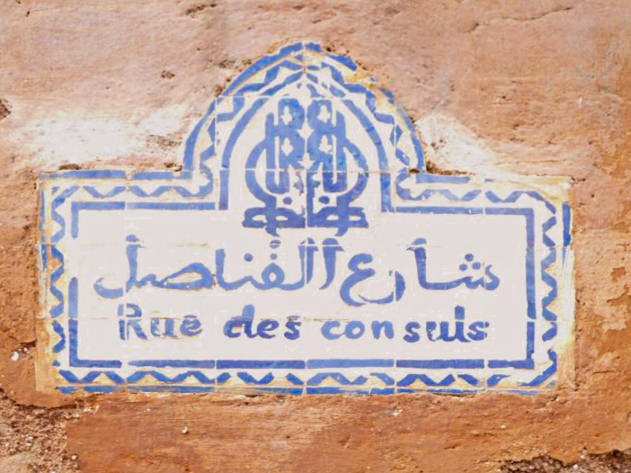
🐪 Wander the medina and Rue des Consuls
Third on this list of things to do in Rabat ranks the city´s medina.It was certainly not as overwhelming as Fez or Marrakech, although it was also bustling and somewhat neglected. Still, we found it was perfect for strolling and shopping without (that much) stress. I remember being fascinated by stalls selling colorful rugs, handmade crafts, and even quirky items like tassels for curtains.
Don’t miss Rue des Consuls, once home to foreign embassies and now a lively shopping street full of artisan shops under an elegant glass roof. Head to the nearby Ensemble Artisanal to buy Moroccan crafts. Rue Souïka and Rue Souk Sabbate, next to the Grand Mosque, are other great spots if you´re looking for leather goods, jewelry or fabrics.
🎨 Discover Rabat’s museums
If you’re into culture, Rabat has some great museums. The Mohammed VI Museum of Modern and Contemporary Art (Musée Mohammed VI d’Art Moderne et Contemporain – MMVI) is the most impressive, hosting Moroccan and international artists.
There’s also the Museum of History & Civilizations (Musée de l´Histoire et des Civilisations – MHC) with Roman artifacts, a nice tie-in if you also plan to visit nearby Volubilis.
Other museums in Rabat worth adding to your itinerary include Musée Bank Al Maghrib, Musée Barid Al-Maghrib (the postal museum), Musée Mohammed V (a museum dedicated to the history of the Alaouite dynasty), Musée National de la Parure (dedicated to Moroccan jewellery), Musée National d’Histoire Naturelle – Institut Scientifique, Musée National de la Photographie or Villa des Arts.

🌊 Relax by the Bouregreg River & Rabat beach
After sightseeing the various landmarks in the capital of Morocco, take some time to enjoy the Atlantic coast. Walk along the Corniche Bouregreg, watch the fishermen, admire the lighthouse (phare de Rabat) or simply head to Rabat beach for a dose of sea air. The sunset views from the kasbah, or from Salé across the river are also unforgettable.
Other beaches in or near Rabat worth mentioning include Plage de Salé Ville, Plage des Nations (there´s a golf course next to it) or Plage de Témara.
🏛️ Explore the Chellah Necropolis & Sala Colonia
Last on our list of things to do in Rabat is the Chellah necropolis, one of the city’s most evocative landmarks. Unfortunately, we didn´t get to visit it during our short stay in the capital of Morocco.
Located south of the city and surrounded by imposing Marinid walls, you will access this UNESCO World Heritage Site through the gate of Bab Zaer. Inside, you’ll find a mix of Islamic ruins and sacred spaces including the remains of a mosque, a koubba (sanctuary), a zaouia (religious institution), and several mausoleums.
But Chellah’s story goes back even further. In Roman times, this was the bustling city of Sala Colonia, and you can still walk along parts of the Decumanus Maximus, the main street that once led directly to the port. Crumbling columns, scattered stones, and traces of mosaics give a vivid sense of its classical past, while the storks nesting on minarets add a surreal, almost mystical touch to the site today.
Nowadays, the site of Chellah hosts various events, including the Jazz au Chellah festival taking place in September.

📝Travel tips for Rabat
In case this is your very first time visiting the Moroccan city of Rabat, here are a few tips to help you navigate this lovely destination. For further details about useful words in Arabic, as well as recommendations on cultural norms, haggling or safety, head to my Morocco destination page.
- 🗓 Best time to visit and key events: Rabat enjoys a mild coastal climate, but make sure to bring layers as it can be windy by the ocean, even in summer evenings. When it comes to events in Rabat, you won´t be disappointed: check out the Mawazine Festival (one of Africa’s biggest music festivals happening in May/June), Jazz au Chellah (in September), the Rabat International Film Festival (taking place during the fall) or Visa for Music (the leading music industry festival in Africa and the Middle East in November).
- ⏳ History: Rabat’s story goes back a long time. The Chellah site was actually first settled by the Phoenicians and later became a Roman city. In the 12th century, the Almohad dynasty built the city as a fortified base — the abovementioned kasbah of the Udayas. Its strategic position at the mouth of the Bouregreg River made it both a military stronghold and later a thriving port. Over the centuries, Rabat became a refuge for Andalusian Muslims expelled from Spain, who left their cultural imprint on the city’s architecture and gardens. Declared Morocco’s capital by the French in 1912, Rabat has since blended its imperial past with a modern, coastal charm, earning UNESCO World Heritage status in 2012.
- 📍Itinerary: we stayed just one night in Rabat, which allowed us to spend the evening and the following morning sightseeing the city before heading to Casablanca. Even though we felt we had enough time to visit the main landmarks of the capital of Morocco, I wouldn´t have minded staying longer as this was definitely my favorite destination of our road trip. So if you can, do so by all means!
- 💬 Language: note that Arabic and Berber are the two official languages in the country. Throughout Moroccan cities, including Rabat, you will often find street signs in both Arabic and French, since the latter remains the main way to communicate for business or politics (and tourists 🙂 ). On that note, when visiting the country and others in the Middle East, chances are you will repeatedly run into some Arabic words such as kasbah, riad or souk. Head to my glossary in the Morocco destination page for the full list. Additionally, a friendly ´salaam alaikum´ (peace be upon you) is a warm and appreciated greeting when interacting with locals.
- 🛟 Safety: when visiting Rabat, particularly the bustling medina, be mindful of your belongings and stay alert. In my opinion, traveling as a woman is generally safe, but it’s important to take precautions to ensure a comfortable experience. Dressing modestly can help you avoid unwanted attention, especially in traditional areas. Also, sticking to busy, well-lit streets is advisable when exploring at night. Be confident but polite when declining persistent vendors or unsolicited advances. Traveling with a companion or group is ideal, but solo travel is also manageable with preparation and awareness. Trust your instincts, respect local customs, and enjoy the warm hospitality Morocco is known for. For extra peace of mind when traveling abroad, you can calculate how much you would pay for your health insurance with the SafetyWing widget below.
🍽️ Where to eat in Rabat
One of my fondest memories in Rabat was our unexpected dinner at the restaurant in Riad Kalaa. After getting hopelessly lost in the medina trying to find our riad, we ended up there by chance (although later on I remembered that a good friend of mine had recommended this place for a good reason). It turned out to be a delicious discovery: plates of hummus, eggplant, fresh tomato salad, incredible chicken pastilla, skewers of beef and chicken, and a citrus mousse for dessert. Honestly, one of the best meals of our Moroccan road trip!

Here are some other cafes and restaurants you shouldn’t miss when visiting the capital of Morocco: Café del Mar, Café des Oudayas (the former Café Maure), Chez Chihab, Dar Naji, Dinarjat, La Brasserie, La Koutoubia, Latium, Le Dhow, Le Goéland, L´Entrecôte, Le Puzzle, Pizzeria Reggio (Italian cuisine), Restaurant Al Marsa, Zerda, Zyriab.
If you´re looking for fresh snacks, street food and markets head near Marché Central.
Do you like my content? Subscribe to my newsletter to stay tuned.
🏨 Where to stay in Rabat
Rabat offers plenty of choices, but I definitely recommend staying in a riad to get the real Moroccan vibe. In our case, we spent the night at Riad Senso, where we were welcomed with mint tea and pastries. Breakfast was delicious too, especially the raif (a Moroccan crepe I quickly became addicted to).
For modern comfort, there are several international hotels outside the medina. Budget travelers can also find guesthouses near the train station.

If you’re wondering where to stay in the capital of Morocco, here’s a selection of the best Rabat hotels sorted by budget:
- Riads in Rabat: Art Riad, Dar Mayssane, Riad Dar El Kebira, Riad Dar Soufa, Riad El Maati, Riad Kalaa (even if you don’t stay here, consider eating there as their food was amazing!), Riad Senso (where we stayed; we loved it!), Riad Zyo.
- Luxury hotels in Rabat (Morocco) (⭐⭐⭐⭐⭐): Fairmont Hotel La Marina Rabat-Salé (in Salé), Hotel Amphitrite Palace (in nearby Skhirat), Hotel Borj Rabat (former Hotel Farah), Hotel Rabat, La Tour Hassan Palace, Sofitel Rabat Jardin des Roses.
- Medium range hotels in Rabat, the capital city of Morocco (⭐⭐⭐ or ⭐⭐⭐⭐): Dar Shâan, Euphoriad, ibis Rabat Agdal, Helnan Chellah Rabat Hotel, Hotel Le Diwan, Hôtel Mercure Rabat Sheherazade, Hôtel Soundouss, Majliss Hotel Downtown, Villa Mandarine.
- Budget accommodation in the Moroccan capital (⭐⭐ or below): Dar Al Batoul, Dar El Ghali.
For more accommodation options in Rabat, feel free to check out Airbnb, Booking or Hostelworld, my go-to platforms wherever I travel.
🚕 How to get around the city of Rabat
Getting around Rabat is surprisingly easy compared to other Moroccan cities. Here are the main options:
- 🛥️ By boat: while the Port of Rabat mainly serves fishing and leisure boats but not international ferries, you can cross the Bouregreg River by small rowboats to visit the neighboring city of Salé and its fancy Marina Bouregreg Salé.
- 🚌 By bus: Rabat has an extensive public bus network that connects different neighborhoods and suburbs. It’s the cheapest way to move around, though buses can be slow and crowded compared to the tram. If you´re traveling to other Moroccan cities by bus, head to the Rabat bus station (gare routière).
- 🚗 By car: renting a car would only be useful if you’re doing a road trip or day trips outside Rabat as was our case. Inside the city, parking can be tricky (trust me, I learned this while circling around with luggage trying to reach our riad!).
- 🚶 On foot: the medina, kasbah, and many attractions in Rabat are walkable. I loved strolling through the streets of the capital — less chaotic than other Moroccan cities, but still buzzing with life.
- ✈️ By plane: Rabat is served by Rabat-Salé International Airport (RBA), just 8 km from the city center. It has regular connections with European cities and some domestic routes. From the airport, you can reach Rabat by taxi or shuttle bus.
- 🚖 By taxi: the small, cheap and efficient taxis known as petits taxis are everywhere. Just make sure the meter is on (or agree on a price before heading where you want to go).
- 🚂 By train: Rabat is very well connected by ONCF trains to other Moroccan cities. The two main stations — Rabat Ville (central) and Agdal — have frequent trains to Casablanca, Fez, Marrakech or Tangier. I hear that trains are modern, comfortable, and reliable, making them the best option for intercity travel. Definitely a means of transportation I´m hoping to test during my next trip to the country.
- 🚌 Tramway: Rabat has a modern tram connecting the city with Salé across the river. It’s clean, reliable, and perfect if you want to avoid traffic.
📍Map with the best things to do in Rabat
For your ease of reference, below you will find a map of Rabat with all the spots mentioned throughout this blog post. They are color-coded by category (things to do, restaurants, hotels, day trip destinations). Use it to plan your next trip!
🧳Day trips from Rabat, the capital of Morocco

Even though Rabat was my favorite Moroccan city during our first visit to the country, there are other nearby destinations worth exploring if your schedule allows:
- 🕌 Casablanca: just over an hour away, you can visit Morocco´s largest city and its iconic Hassan II Mosque, one of the few temples open to non-Muslims. Its sheer size and seaside location by the Atlantic ocean make it a jaw-dropping experience.
- 🌾 Kenitra: if you’re looking for a more off-the-beaten-path escape, head north to this city. The Kasbah of Mehdia, the Sidi Boughaba Nature Reserve or Mehdia Beach are some of the locals´ favorite weekend spots.
- 🏛 Meknès & Volubilis: we tried to visit Volubilis, an important Roman outpost, on our way from Fez to Rabat but missed the signs (typical Morocco!). If you plan ahead, this archaelogical site is a fantastic day trip combined with the imperial city of Meknès.
- 🌊 Salé: right across the river, this less touristy town has charming medina vibes, a beautiful old mosque and a vast beach offering magnificent views of the Kasbah of the Oudayas in Rabat. We didn´t have time to visit this time around, but I might add it to our next itinerary!
Browse my Morocco resources for further inspiration!
My ultimate Essaouira travel guide
Things to do in Agadir: my travel guide + map
Things to do in Casablanca: a complete travel guide & map
Things to do in Marrakech: travel guide + map
Top 6 cities in Morocco to visit (+ more for your bucket list)
What to do in Fez: my complete travel guide & map
If you´re feeling adventurous, discover other destinations across Africa (such as Ethiopia) or the Middle East (Jordan, Turkey).
🎒 Final thoughts on Rabat
Rabat might not have the frenzy of Marrakech or the maze-like medina of Fez, but that’s exactly why I loved it. The city felt more authentic, calmer, and yet full of beauty. For me, Rabat was the perfect mix of history, charm, and Moroccan hospitality.
If you’re planning a Morocco itinerary, don’t skip Rabat — it might surprise you as much as it surprised me.
How did you enjoy this post detailing the things to do in Rabat? Feel free to leave your questions and comments below, or show your support by loving this article.
***
✈️ Curious to know where I’ll be traveling next? ✈️
Stay tuned by following me on social media (Facebook, Instagram, X) and subscribe to my newsletter for regular updates!
In the meantime, safe travels around the world!
***
| GET READY FOR YOUR NEXT TRIP! |
|---|
| Book memorable activities and tours around the world with Get Your Guide. |
| Browse my travel resources page to plan your upcoming trip. |
| Check out my travel photography prints inspired by cities I’ve visited around the world. |
| Feeling adventurous? Book any outdoor activities worldwide with Manawa! |
| Get medical or health insurance via SafetyWing for extra peace of mind. |
| Looking for sports equipment? Feel free to browse my Decathlon profile for inspiration. |
| Pay in local currency with your Revolut Card when you’re traveling abroad! |
| Stay at my apartment while I´m away (Airbnb, Booking). |