Las Fallas in Valencia: events, traditions and travel tips
Each March, the city of Valencia transforms into one of the most vibrant places in Spain. Firecrackers echo through the streets from early morning, towering satirical sculptures appear in nearly every neighbourhood and fireworks light up the Mediterranean sky long after sunset. This spectacular celebration is known as Las Fallas, Valencia’s most famous festival and one of the most unique cultural events in Europe. If you happen to visit the city during this period, you will quickly realise that Las Fallas are far more than a festival. They represent a fascinating mix of art, satire, fire, music and community spirit that lies at the heart of Valencian culture. In this guide, I explain what the Fallas celebrations are, when they take place, the main events of the festivities and how to experience them like a local, based on my own experience visiting Valencia at the height of the festival.
***
Disclaimers:
- Please note that this post includes some affiliate links. This means that, at no additional cost for you, I earn a commission if you make a purchase. In case you have any questions about the companies advertised here or my status as an affiliate, please do not hesitate to contact me.
- If you’d like a glimpse of what the Fallas celebrations look like in person, feel free to check out my Instagram reels and posts from my visit to Valencia in March 2025 (post 1, post 2). This article was originally written shortly after my trip and has since been updated to reflect the latest information about the Fallas festival in Valencia.
***
🔥 What is the Fallas festival in Valencia?
Las Fallas (or Les Falles in Valencian) is Valencia’s most famous festival and one of the most spectacular celebrations in Spain.
The term “Fallas” can actually refer to two related things: the festival itself and the monumental sculptures displayed across the city during the celebrations. In everyday language, Valencians often use the word to describe both the festivities and the impressive monuments that give the event its name.
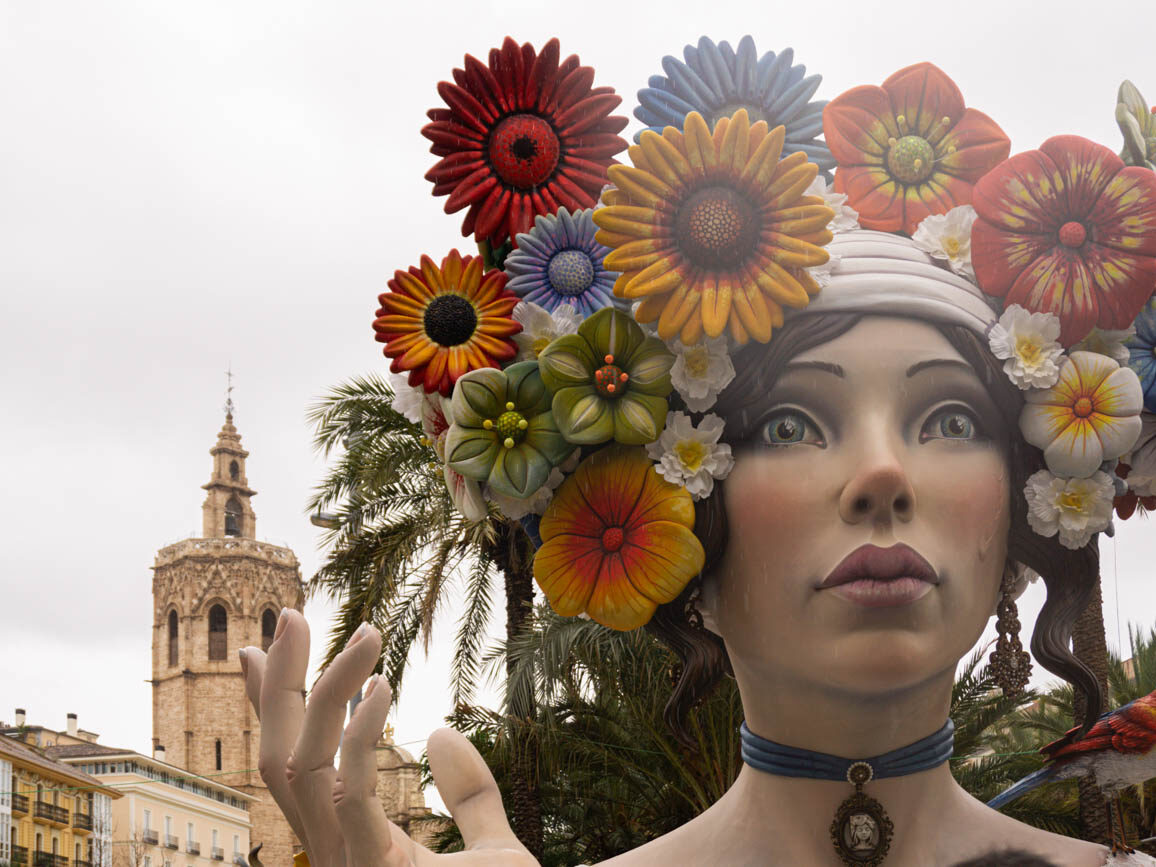
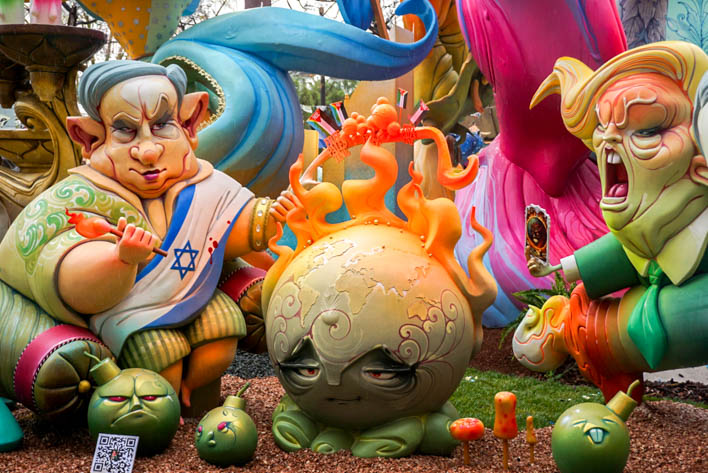
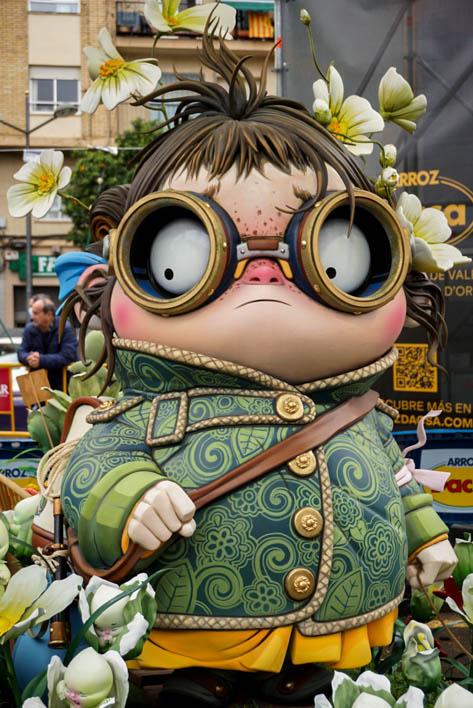
As mentioned, the word falla refers to a large satirical monument made up of multiple figures called ninots. These sculptures are typically constructed using wood, cardboard or polyurethane and are designed by local artists to comment on political, cultural or social issues — often with a humorous twist.
Many of these monuments are constructed in La Ciutat Fallera, a district in northern Valencia where specialised workshops design and build the sculptures throughout the year. If you’re curious to learn more about how these impressive monuments are brought to life, other interesting places to visit include the Museo Fallero, the Museo del Gremio de Artistas Falleros and the Museo y Colegio del Arte Mayor de la Seda, which showcase the artistic traditions and craftsmanship behind many Valencian cultural celebrations.
The origins of Las Fallas date back several centuries. According to tradition, local carpenters would burn old wooden structures used to support their winter lamps on the eve of Saint Joseph, their patron saint. Over time, these simple bonfires evolved into elaborate satirical monuments that eventually became the spectacular fallas we see today. Some monuments can reach more than 20 metres in height, require an entire year to design and build, and cost tens of thousands of euros.
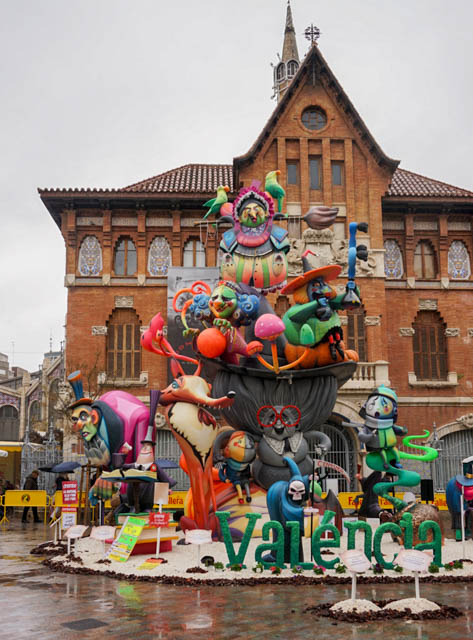
Throughout the celebrations, hundreds of these sculptures appear across the city, transforming Valencia into a vast open-air museum of ephemeral art.
The most surprising aspect of this tradition is how the festival ends. On the final night of the celebrations, nearly all the monuments are burned to the ground during the cremà, symbolising renewal and the arrival of spring. Only one sculpture escapes the flames each year: the ninot indultat, chosen by public vote and preserved in Valencia’s Museo Fallero.
The cultural importance of this tradition is so significant that UNESCO recognized Las Fallas as Intangible Cultural Heritage of Humanity in 2016, highlighting the festival’s artistic creativity and deep community roots. Today, the Fallas festival is considered one of the most spectacular cultural traditions in Spain. Each March, Valencia becomes an open-air museum of art, satire and pyrotechnics, attracting more than a million visitors who come to admire the monumental sculptures and experience the unique atmosphere of the festival.
🎭 How many fallas monuments are built in Valencia each year?
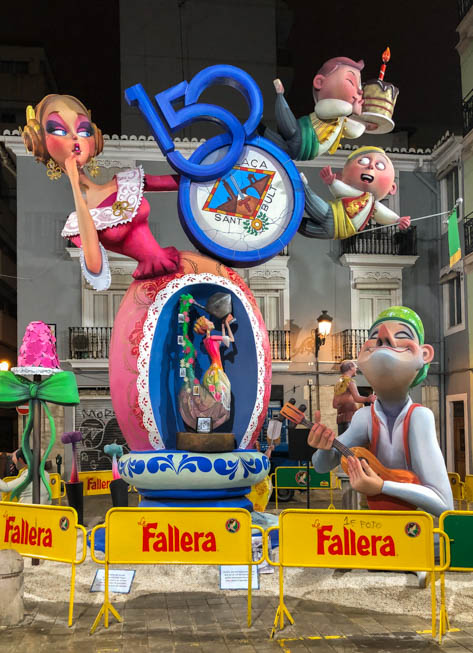
Every March, around 800 fallas monuments are installed across Valencia.
These monuments belong to neighbourhood associations known as comisiones falleras, groups of locals who spend the entire year organising activities, raising funds and commissioning the fallas that represent their community.
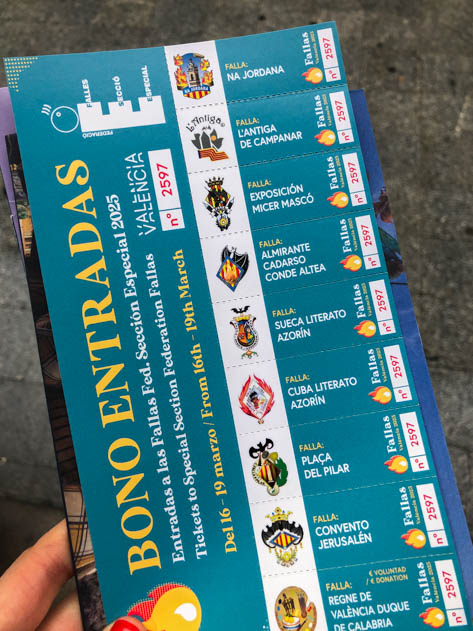
The monuments are divided into several categories depending on their size and budget. The most prestigious category is the Sección Especial, which features the largest and most impressive fallas in the city. These sculptures are among the most visited fallas monuments in Valencia and often attract long queues of visitors eager to admire their intricate details and satirical scenes.
The following fallas associations compete in the prestigious Sección Especial, the top category reserved for the biggest and most elaborate monuments in the city:
- Almirante Cadarso – Conde Altea
- Convento Jerusalén – Matemático Marzal
- Cuba – Literato Azorín
- Exposición – Mícer Mascó
- L’Antiga de Campanar
- Na Jordana
- Plaza del Pilar
- Reino de Valencia – Duque de Calabria
- Sueca – Literato Azorín
Las Fallas are not only a celebration but also a major artistic competition. Each monument is judged by official juries and awards are given in multiple categories depending on size and budget. Besides the prestigious Sección Especial, other categories include Sección Grande and Fallas Infantiles, smaller monuments created especially for children.
Although Valencia hosts the largest and most famous Fallas celebrations, similar festivals are also celebrated in other towns across the Valencian Community such as Alzira, Dénia or Gandía. While these events are usually smaller than those in Valencia, they offer a more local and less crowded way to experience this unique tradition.
📅 When do Las Fallas take place in Valencia?
The Fallas festival take place every year in March, culminating on March 19, the feast day of Saint Joseph (San José).
Although preparations begin months earlier, the most intense celebrations occur during Semana Fallera, which runs from March 15 to March 19.
During these days, Valencia becomes a city that barely sleeps, filled with parades, fireworks, music and traditional celebrations.
Each year, more than a million visitors travel to Valencia to experience the Fallas celebrations, making it one of the most popular cultural festivals in Spain.
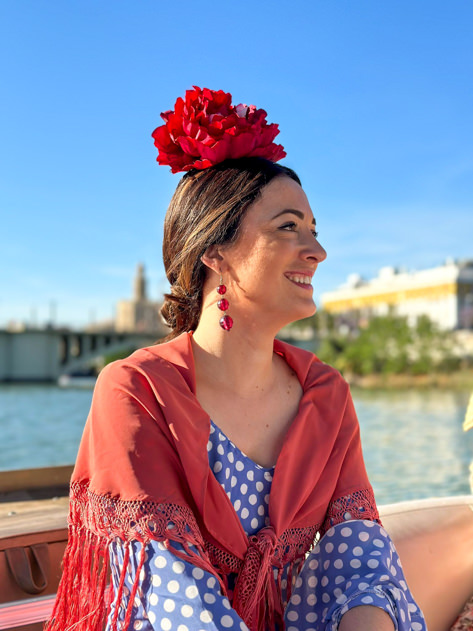
Learn more about these traditions around the world.
A guide to the Feria de Abril in Sevilla
Opilla recipe and tradition: the traditional Basque cake from Irún
San Pedro and San Marcial ´fiestas´ in Irún: the tradition of the Alarde
The cheerful Carnival of Tarija
🎯 Key events of the Fallas celebrations
Although Las Fallas technically last several weeks, the most intense celebrations take place between March 15 and March 19.
The Fallas calendar includes several traditional events spread across the city. The table below summarises the most important ones.
| Event | Date | Time | Location | Description |
|---|---|---|---|---|
| Crida | Late February | 19:30 | Torres de Serranos | Official opening ceremony of the festival |
| Cabalgata del Ninot | Early March | 17:30 | City centre | Satirical parade of costumes and floats |
| Mascletà | March 1–19 | 14:00 | Plaza del Ayuntamiento | Daily pyrotechnic show |
| Plantà | March 15 | Night | Citywide | Official installation of monuments |
| Nit de l’Albà | March 15 | Midnight | Plaza del Ayuntamiento | Fireworks celebrating the installation |
| Despertà | Festival days | Early morning | Citywide | Firecrackers used to wake neighbourhoods |
| Ofrena de Flors | March 17–18 | Afternoon | Plaza de la Virgen | Flower offering to the patron saint |
| Nit del Foc | March 18 | Midnight | City of Arts & Sciences | Largest fireworks display |
| Cremà | March 19 | Evening | Citywide | Burning of the monuments |
| Cabalgata del Foc | March 19 | 19:00 | Calle Colón | Fire-themed parade |
🎆 The main events of Las Fallas festival
Mascletà
One of the most famous daily events is the mascletà, held every day at 2 PM in Plaza del Ayuntamiento from March 1 to March 19.
Unlike traditional fireworks, the mascletà focuses on rhythm and sound rather than visual effects. Thousands of firecrackers explode in carefully choreographed sequences that build toward an intense finale known as the terratremol (“earthquake”).
Just before the show begins, the Fallera Mayor traditionally announces: “Senyor pirotècnic, pot començar la mascletà.” Seconds later, the entire square erupts in thunderous sound.

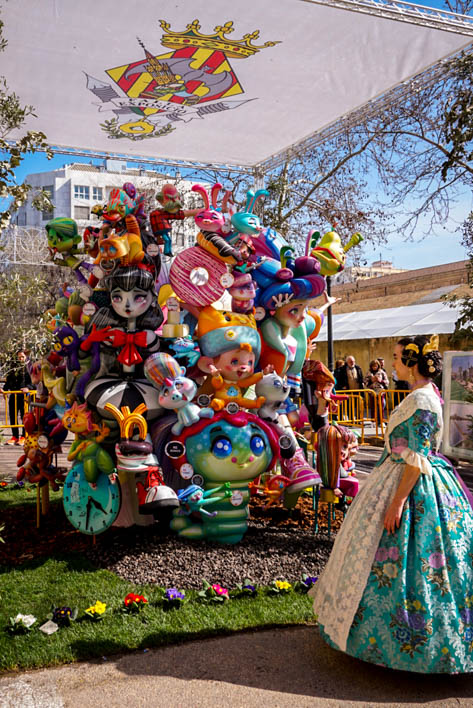
Plantà
The plantà marks the moment when all fallas monuments are officially installed throughout the city.
This takes place on March 15, when the sculptures are assembled in their final locations, transforming Valencia into a vast open-air exhibition.
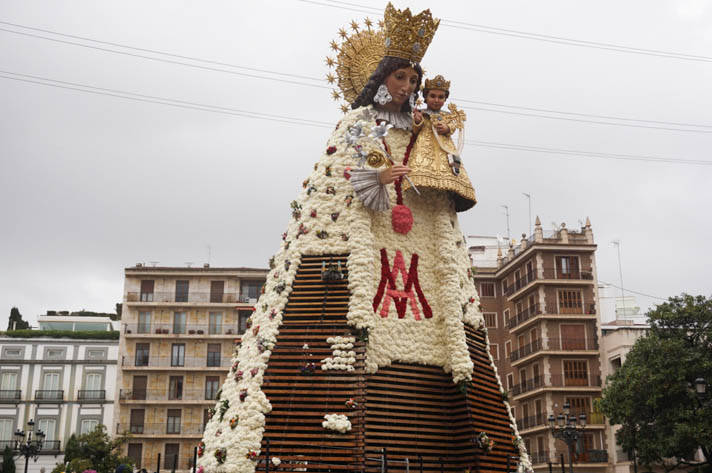
Ofrena de Flors
One of the most emotional traditions of the festival is the Ofrena de Flors.
On March 17 and 18, thousands of falleros and falleras dressed in traditional costumes parade through the city carrying flowers to Plaza de la Virgen.
These flowers are used to create a giant cloak for the Virgin of the Forsaken (Mare de Déu dels Desemparats), Valencia’s patron saint.
Another important tradition during the festival is the election of the Fallera Mayor of Valencia and her Corte de Honor. These representatives act as ambassadors of the festival throughout the year. Their elaborate traditional dresses, intricate hairstyles and ceremonial appearances play a central role in many Fallas events. They would actually be the equivalent of our ´cantineras´ in the Alarde of Irún.
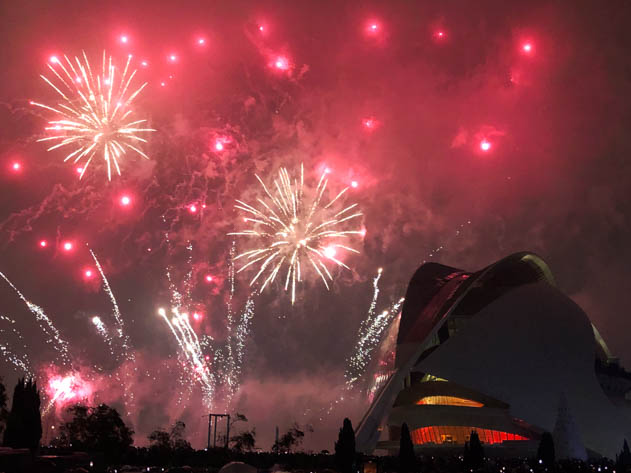
Nit del Foc
On the night of March 18, Valencia hosts one of the most spectacular fireworks displays of the entire festival: Nit del Foc, or “Night of Fire”.
This massive show takes place near the City of Arts and Sciences (Ciudad de las Artes y las Ciencias).
The cremà
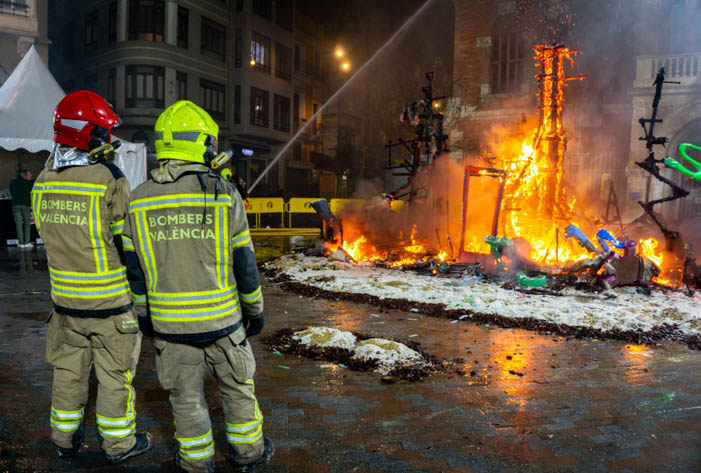
The festival reaches its dramatic finale on March 19, when all fallas monuments are burned during the cremà.
Children’s fallas burn first, followed by the larger monuments later in the evening.
It is both a fascinating and bittersweet moment — the culmination of a year of artistic work that disappears in a single night.
🎉 Best ways to experience the Fallas celebrations
Experiencing the Fallas celebrations is about much more than attending the official events.
One of the best ways to experience the celebrations is simply walking around the city and discovering the fallas monuments scattered across different neighbourhoods.
I had seen photos of these monuments for years, but seeing them in person was something entirely different. Their sheer size and artistic detail were far more impressive than I expected, especially the monuments competing in the Sección Especial.
Another unforgettable part of the festival is the atmosphere in the streets. Marching bands play traditional music, firecrackers explode throughout the day and the smell of gunpowder fills the air.
It may feel chaotic at times, but that sensory overload is precisely what makes the festival such a unique experience.

Feeling adventurous? Check out these outdoor activities with Manawa in Valencia.
Boat Rental without Licence from Valencia Marina
Canyoning on the ravine of Anna, Valencia
Excursion by jet ski in the Malvarrosa Bay, Valencia
Private Boat Tour from Valencia Marina
Stand Up Paddle Rental in Valencia
Via ferrata of Fuente Godalla in Enguera, near Valencia
🍴 Traditional food to try at the Fallas festival
Food is an essential part of the celebrations as well.
Street stalls across the city serve traditional Valencian treats, especially sweets associated with the festival.
Many neighbourhood celebrations take place around the casal faller, the social headquarters of each falla association, where locals gather to eat, celebrate and organise festival activities.
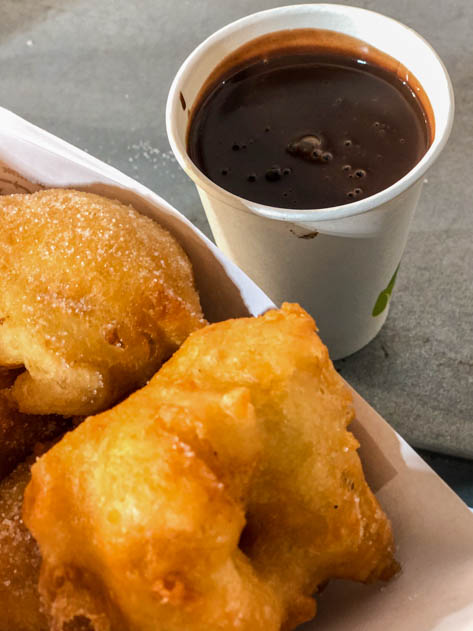
One of the most popular snacks is buñuelos de calabaza, pumpkin fritters typically served with hot chocolate.
Another must-try sweet specialty during the festival is horchata de chufa, a refreshing drink made from tiger nuts grown in nearby Alboraya. It can be served in several ways — liquid (líquida), frozen like a slush (granizada), or mixed (mixta). It is traditionally enjoyed with fartons, long pastries covered in sugar that are perfect for dipping into the drink.
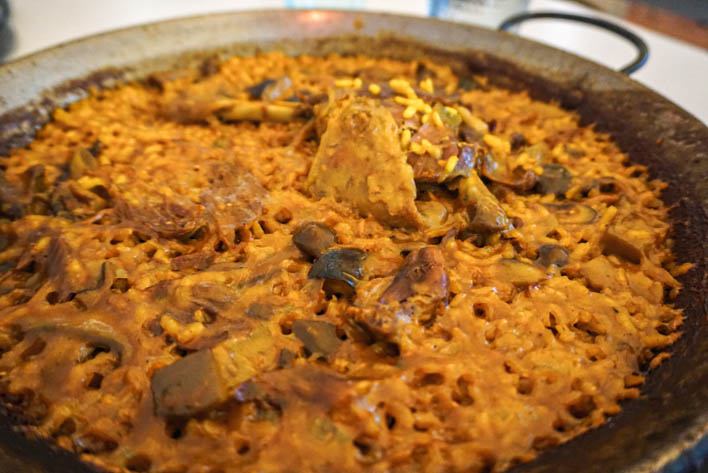
And of course, no visit to Valencia would be complete without tasting paella, the region’s most famous dish.
Do you like my content? Subscribe to my newsletter to stay tuned.
🧳 Travel tips for visiting Valencia during Fallas
If you plan to visit Valencia during Las Fallas, preparation is key.
First of all, book accommodation early, as this is the busiest time of the year in the city. Even after booking my flights early, I struggled to find accommodation and eventually stayed at The River Hostel, located near the Turia Gardens. The location turned out to be very convenient for exploring the city on foot and reaching many of the festival events.
Expect large crowds and many street closures. Walking is often the easiest way to get around.
You should also prepare for noise and very little sleep, as firecrackers begin early in the morning during the despertà and celebrations continue late into the night. Despite the crowds and noise, I can assure you that the experience is absolutely worth it.
Comfortable shoes are essential — I walked for hours each day exploring the different fallas scattered throughout the city.
To stay up to date with the latest news and events during the Fallas, I recommend following Valencia Secreta and Visit Valencia on social media, as they regularly share schedules, updates and highlights throughout the festival.
In terms of safety and security, Valencia is generally a safe city, but as with any major festival attracting huge crowds, it is wise to stay aware of your surroundings. Pickpocketing can occur in busy tourist areas and especially in places packed with visitors during the festivities.
Because the celebrations involve firecrackers, fireworks and large public gatherings, safety measures are taken very seriously. Security perimeters and teams of firefighters are present around key locations such as Plaza del Ayuntamiento during the daily mascletàs or near the Palau de les Arts during Nit del Foc.
When attending a mascletà, locals often recommend opening your mouth slightly during the explosions to help reduce pressure on your ears. Covering your mouth and nose with a handkerchief can also help avoid inhaling smoke.
For extra peace of mind when traveling abroad, you can calculate how much you would pay for your health insurance with the SafetyWing widget above.
✨ My experience at Las Fallas in Valencia
As I expected, witnessing Las Fallas in Valencia was an unforgettable experience.
The city felt incredibly lively during those days — crowded and noisy, but full of excitement and tradition.
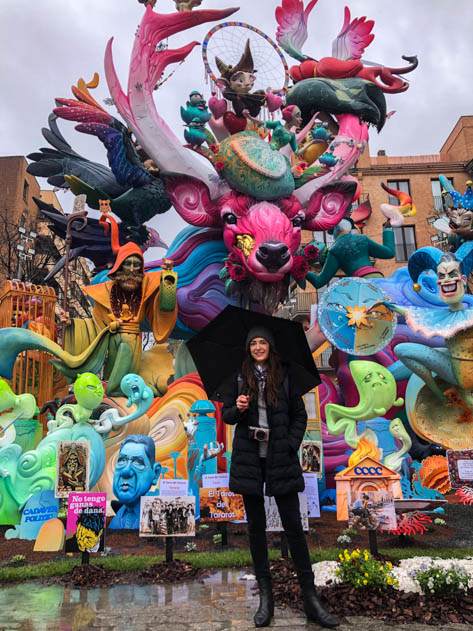
What impressed me most was finally seeing these monumental sculptures up close after years of watching them on television. They were absolutely breathtaking, not just as works of art but also because of their towering scale. Among the largest monuments, Falla del Pilar was probably my favourite. One detail that surprised me was discovering that each falla can actually be admired from multiple sides. Many monuments feature both a front and a back façade, allowing you to walk around them and discover new scenes and characters from every angle — almost like a 360-degree sculpture.
I also bought a ticket to visit several of the monuments competing in the Sección Especial, which I highly recommend if it fits your schedule. While it’s certainly not mandatory to enjoy the festival, having a ticket makes it much easier to admire some of the most impressive fallas from up close without waiting in long queues. It also allows you to appreciate the incredible level of detail in the sculptures — something that can be difficult to notice when viewing them from a distance. For me, it was definitely worth it.
When I visited in 2025, the festival felt particularly emotional following the devastating floods that affected parts of the Valencia region the previous October. Many fallas monuments referenced the tragedy, depicting scenes of people asking for help or figures covered in mud. It was a powerful reminder of how the festival often reflects current events through satire and social commentary.
🇪🇸 Valencia travel guide
Beyond the Fallas celebrations, Valencia itself is a fascinating destination.
As the capital of the Valencian Community and Spain’s third-largest city, Valencia offers a unique combination of historic architecture, Mediterranean beaches and modern design.
Some highlights include:
- the City of Arts and Sciences
- the historic centre
- Mercado Central
- the Turia Gardens
- the colourful seaside neighbourhood of El Cabanyal
If you’re planning to explore the city beyond the festival, you can also check out my detailed guide on the top things to do in Valencia, where I cover many of the city’s main attractions in more detail.

🗺 Day trips from Valencia
If you have extra time during your visit, Valencia is also a great base for exploring other destinations in the Valencian Community, which is divided into three provinces: Castellón, Valencia and Alicante.
While Valencia itself offers plenty to see, venturing beyond the city allows you to discover charming coastal towns, historic inland villages and beautiful Mediterranean landscapes across the region.
Here are a few great day trip ideas from Valencia:
- Altea (Alicante province): a picturesque coastal town known for its whitewashed houses, cobbled streets and its iconic blue-domed church overlooking the Mediterranean.
- Dénia (Alicante province): a lively seaside town with gorgeous beaches, a historic castle and excellent seafood restaurants.
- Peñíscola (Castellón province): one of the most beautiful coastal towns in the region, dominated by the impressive Papa Luna Castle, dramatically perched on a rocky peninsula above the sea.
- Xàtiva (Valencia province): an inland destination dominated by a spectacular hilltop fortress offering impressive views over the surrounding countryside.
Read these posts for more inspiration around the Valencian Community!
Alicante province (coming up soon)
Things to do in Alicante (travel guide & map)
Top things to do in Valencia: travel guide + map
🎒 Final thoughts on the Fallas festival
Las Fallas are far more than a festival — they are a full sensory experience.
From the thunderous mascletàs and spectacular fireworks to the colourful traditions, elaborate costumes and delicious street food, the celebration captures the essence of Valencian culture.
Whether it is your first time visiting Valencia or you have travelled to Spain many times before, the Fallas celebrations remain one of the most unforgettable cultural experiences in the country.
If you’re planning a trip to Valencia during the festival, feel free to leave your questions or share your experience in the comments below — and don’t forget to show your support by liking this article.
***
✈️ Curious to know where I’ll be traveling next? ✈️
Stay tuned by following me on social media (Facebook, Instagram, X) and subscribe to my newsletter for regular updates!
In the meantime, safe travels around the world!
***
| GET READY FOR YOUR NEXT TRIP! |
|---|
| Book memorable activities and tours around the world with Get Your Guide. |
| Browse my travel resources page to plan your upcoming trip. |
| Check out my travel photography prints inspired by cities I’ve visited around the world. |
| Feeling adventurous? Book any outdoor activities worldwide with Manawa! |
| Get medical or health insurance via SafetyWing for extra peace of mind. |
| Looking for sports equipment? Feel free to browse my Decathlon profile for inspiration. |
| Pay in local currency with your Revolut Card when you’re traveling abroad! |
| Stay at my apartment while I´m away (Airbnb, Booking). |